Do you need to be athletic for a Sahara trek?
When people contact us about a trek in the Sahara, they often imagine long days of exhausting walking over endless dunes. I understand why. The desert looks huge in photographs, and it is easy to assume that only strong hikers can enjoy it.
The reality is much simpler. Most of our guests are not athletes. Some walk regularly at home, some do not. A few arrive slightly worried about whether they can keep up. After the first day, the conversation usually changes. They stop thinking about performance and start paying attention to the landscape around them.
What a trekking day actually looks like
A normal day on trek is not a race. We walk, stop for tea, continue for a while, then stop again. Depending on the route and the season, we usually spend between three and six hours walking during the day. The pace depends on the group.
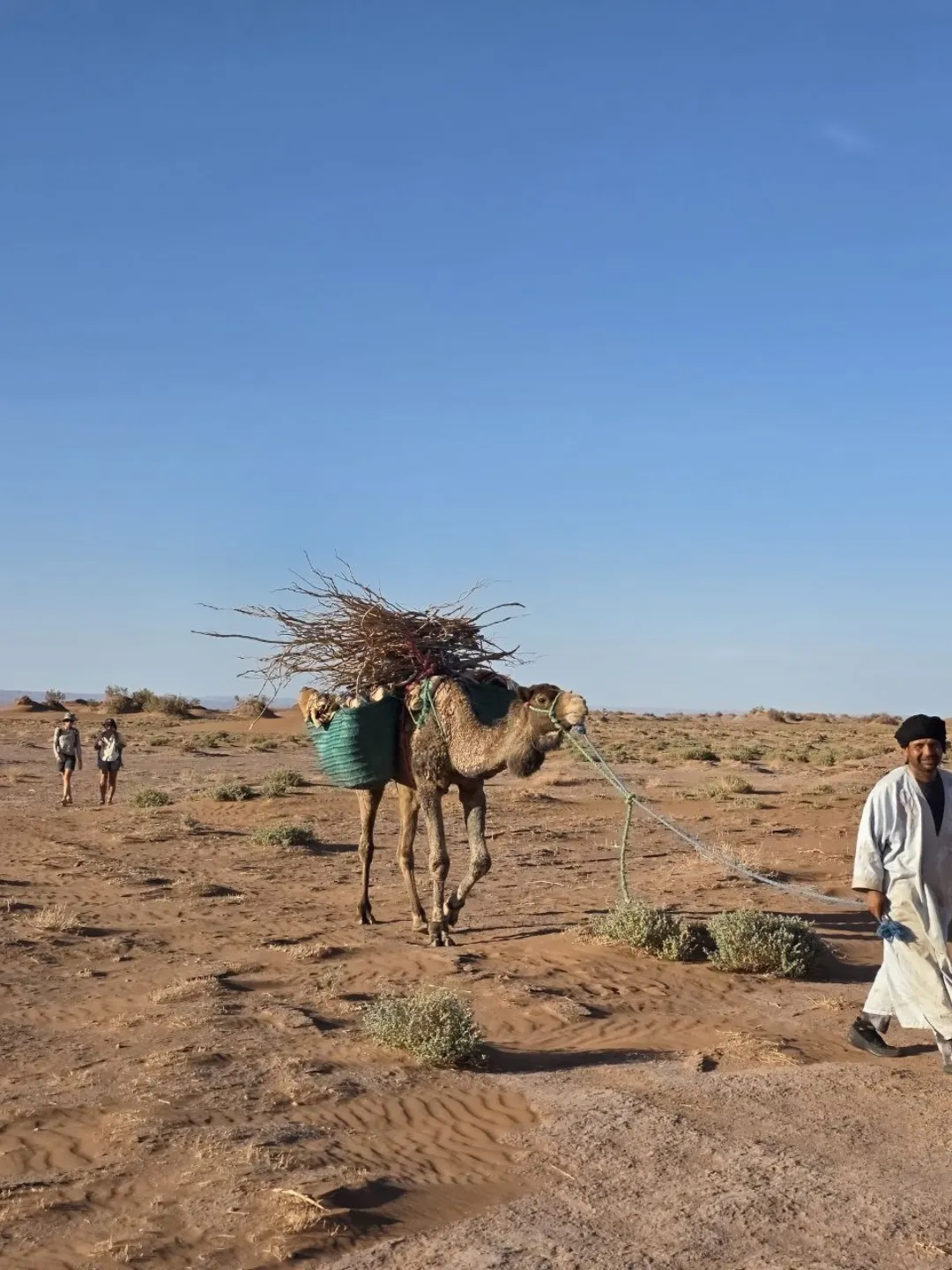
The support team and camels carry the camping equipment, food, and larger bags. That changes the experience quite a bit. You are free to focus on walking, taking photographs, chatting with the guides, or simply listening to the quiet.
The part that surprises people
Walking on sand uses different muscles than a normal trail. During the first day, many people notice it in their calves and ankles. Then the body adapts. I have seen guests in their twenties struggle more than guests in their sixties, usually because the older walkers settle into a comfortable pace instead of trying to charge ahead.
Good health matters more than athletic ability. If you enjoy a regular walk at home and can spend several hours outdoors, you are already close to the level needed for most desert treks.
Why people come to Erg Ezahar
One of my favorite areas is Erg Ezahar, often called the Dune of Silence. The name makes sense when you spend a night there. There are no traffic sounds, no shop signs, and very little to distract you. You walk, sit for tea, watch the light change on the sand, and somehow the day feels full.
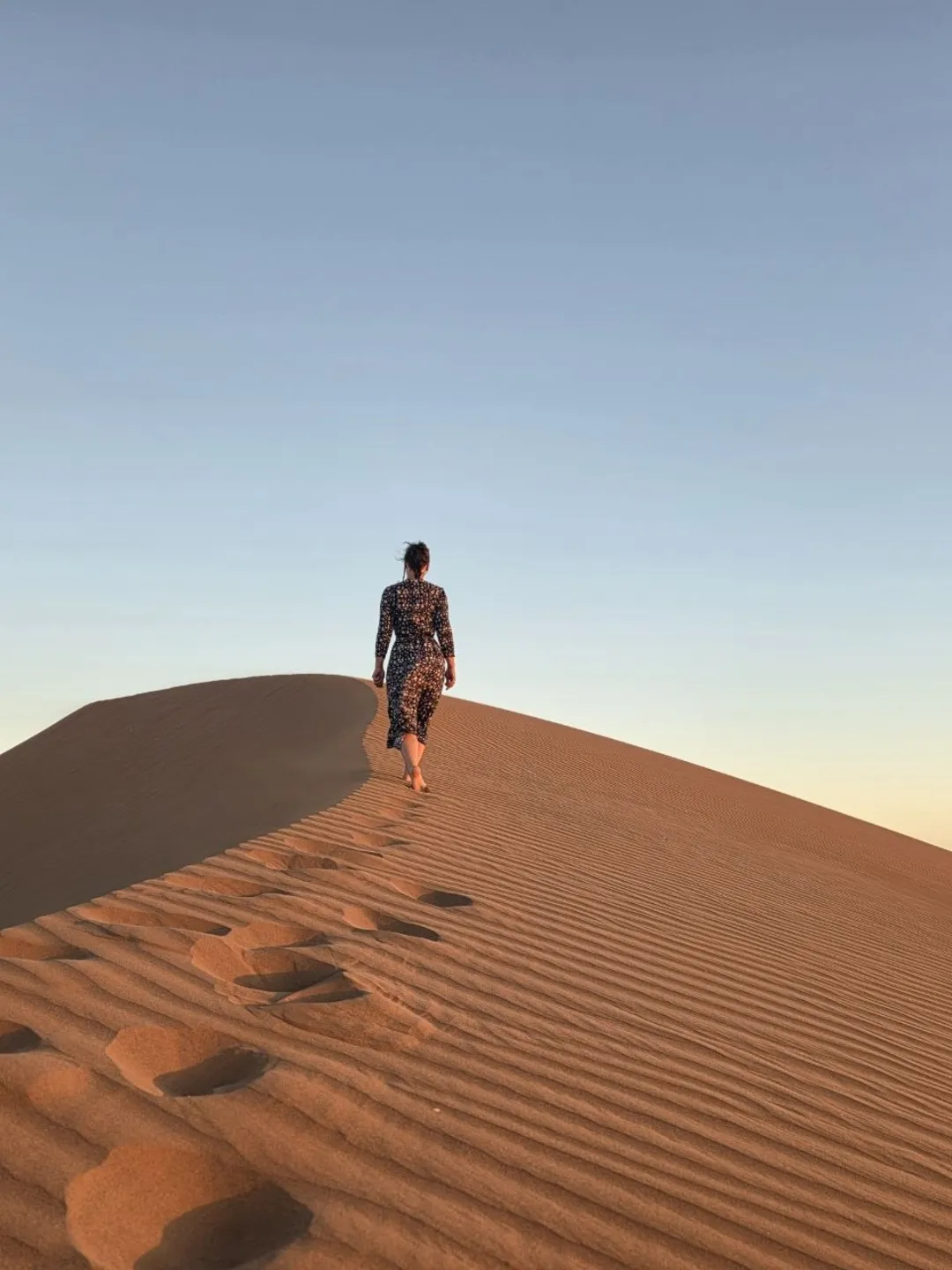
Some travelers arrive hoping for a physical challenge. Others come because they need a break from screens and schedules. The desert has room for both. What they often share afterward is a memory of the quiet rather than the kilometers covered.
A few practical tips before you come
You do not need a special training plan. A few weeks of regular walking before the trip helps. Comfortable shoes, sun protection, and a reusable water bottle matter more than expensive gear. An open mind helps too. Desert travel follows its own timetable, and that is part of the appeal.
The guests who enjoy the trek most are rarely the fastest walkers. They are usually the people who settle into the pace of the desert and stop checking the time.
More than a walking trip
At night we gather around the fire, eat together, and share stories. Sometimes someone brings a drum. Sometimes people simply watch the stars. The desert does not provide constant entertainment, which is exactly why many travelers remember it so clearly.
So, do you need to be athletic for a Sahara trek? In most cases, no. You need reasonable mobility, a willingness to walk, and enough curiosity to spend a few days away from the usual noise. The rest tends to take care of itself.
Gallery