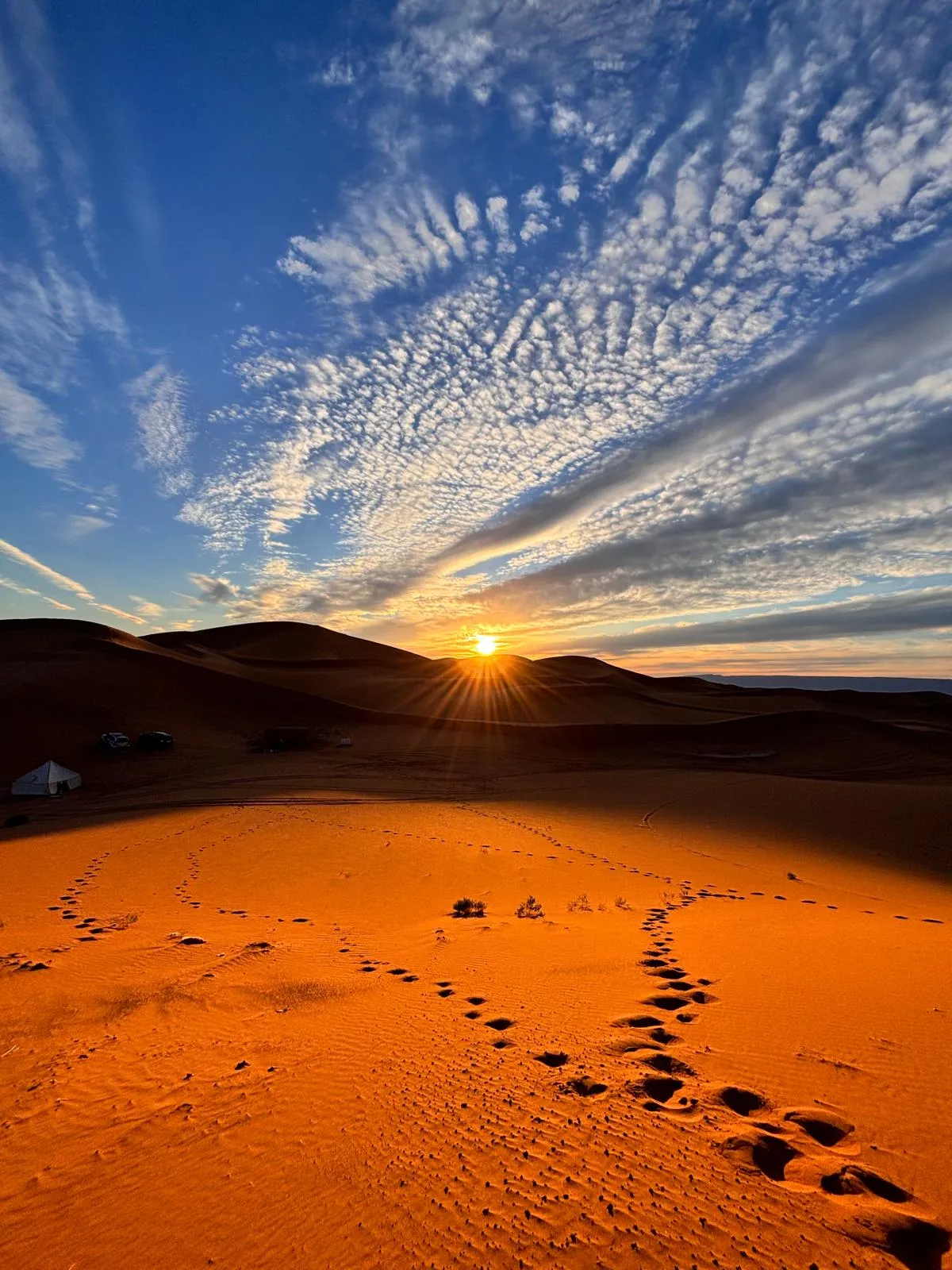
Is the Sahara Desert Safe?
Yes, the Sahara Desert in Morocco is safe to visit—when traveling with experienced guides. The region around M'Hamid and Erg Chigaga is stable, welcoming to tourists, and has a long history of desert tourism.
The main safety concerns in the desert are environmental: extreme heat, cold nights, sun exposure, and dehydration. These are easily managed with proper preparation and experienced guides who know the terrain.
Key Safety Principle: Never travel alone in the desert. Always go with an experienced guide who knows the terrain, water sources, and weather patterns.
Guide-Led Safety
All reputable desert tour operators, including Sahara Wonders, prioritize safety. Our guides have extensive knowledge of the desert environment and years of experience leading groups safely through all conditions.
- Professional guides with local knowledge and years of experience
- Guides provide hydration and sun protection guidance throughout trips
- Experienced drivers for 4x4 trips with well-maintained vehicles
- Communication equipment for emergencies
- Knowledge of safe routes, water points, and shelter locations
- First-aid trained staff on all multi-day expeditions
Health Considerations
| Concern | Risk Level |
| Dehydration | Moderate |
| Sunburn | Moderate-High |
| Heat Exhaustion | Moderate (summer) |
| Hypothermia | Low (winter nights) |
| Altitude | None |
| Food/Water Illness | Low |
Physical Requirements
Most Sahara tours are designed for people with moderate fitness levels. You should be comfortable walking on sand for 2-5 hours per day, depending on your chosen itinerary. No special skills are required.
- Moderate fitness level recommended
- Ability to walk 2-5 hours on sand per day (varies by trip)
- No prior camel riding experience needed—we provide instruction
- Consult your doctor if you have any health concerns
- Children 6+ welcome on most trips
Desert-Specific Safety Tips
The desert environment requires some specific precautions that may be unfamiliar to travelers from other climates.
| Tip | Explanation |
| Stay hydrated | Drink before you feel thirsty; dry air accelerates dehydration |
| Protect from sun | Long sleeves are actually cooler than bare skin in direct sun |
| Watch your step | Uneven terrain; wear sturdy shoes |
| Protect electronics | Sand damages cameras and phones; use sealed bags |
| Never wander alone | Easy to get disoriented; stay with your group |
| Night visibility | Use headlamp; no artificial light in desert |
| Respect wildlife | Scorpions and snakes exist; don't reach into hidden spaces |
Emergency Preparedness
Serious emergencies are rare on guided tours, but preparation is still important.
- Travel insurance is strongly recommended (not included in tour price)
- Carry personal medications with enough supply
- Inform guides of any medical conditions or allergies
- Our guides carry communication equipment for emergencies
- Know the location of nearest medical facilities (M'Hamid, Zagora)
Tips for Women Travelers
Morocco is generally safe for women travelers, and the desert region is no exception. Basic cultural awareness helps ensure a comfortable experience.
- Dress modestly (long sleeves, long pants) for cultural respect
- Travel with reputable tour operators
- Single women travelers are welcome on all our group trips
- Our guides are professional and respectful
Frequently Asked Questions
Yes, camel treks are very safe for beginners. No prior experience is needed. Our guides provide complete instructions on camel riding and desert safety. All tours are designed for first-timers.
Our guides are first-aid trained and carry communication equipment. For serious emergencies, we can arrange evacuation by 4x4 to medical facilities in M'Hamid or Zagora. This is why travel insurance is strongly recommended.
Scorpions and snakes exist in the Sahara but are rarely encountered. Basic precautions—wearing shoes, not reaching into hidden spaces, shaking out shoes before wearing—are sufficient. Our guides know how to avoid and handle any wildlife encounters.
Yes, the region around M'Hamid and Erg Chigaga in southern Morocco is stable and safe for tourism. The area has a long history of welcoming travelers. There are no travel advisories against visiting this region.
During the day, bathroom breaks are taken in nature using the 'desert toilet' approach. At camps, we provide basic portable toilet facilities with privacy. While not luxurious, our facilities are clean and well-maintained within the desert context.