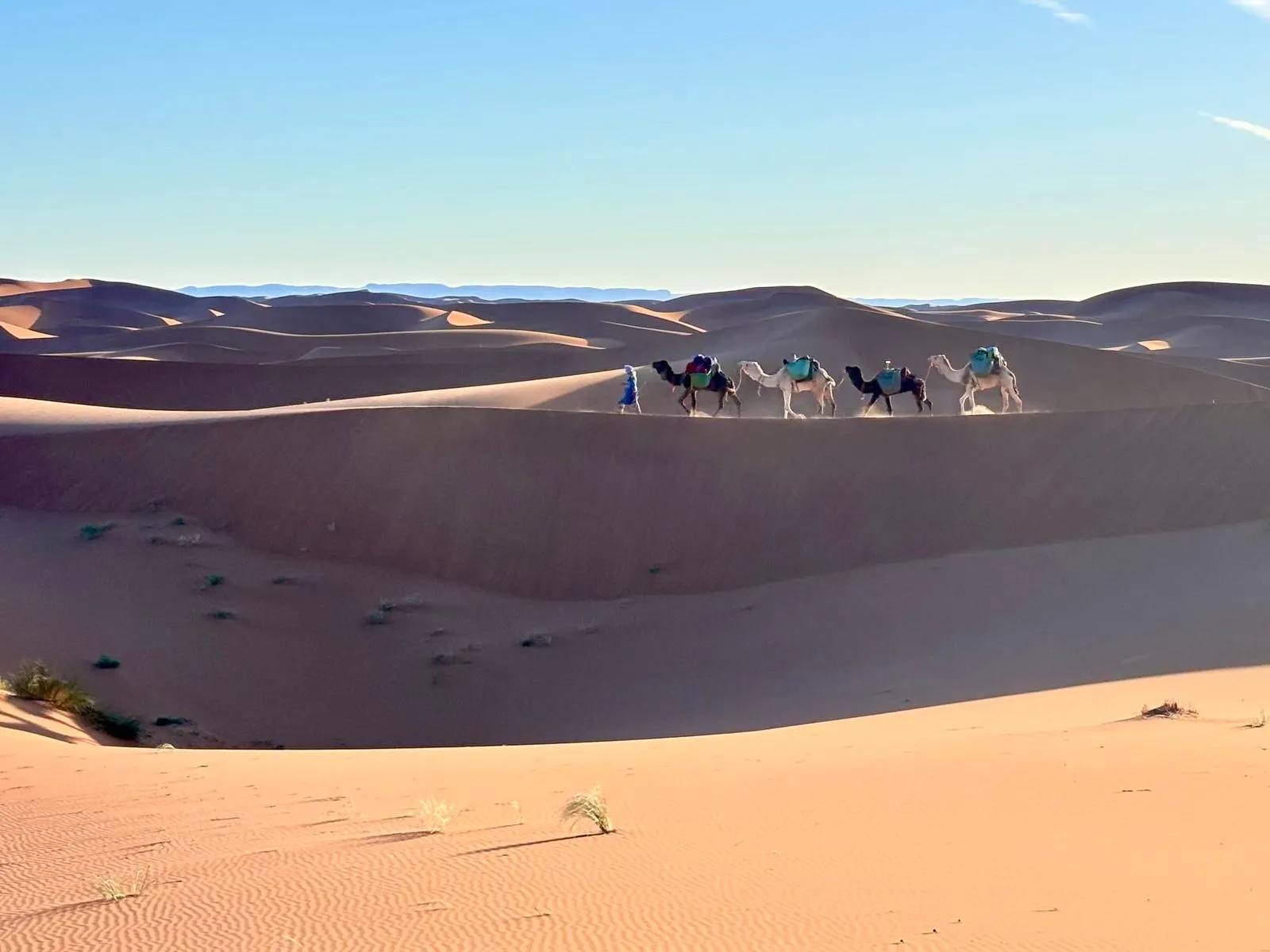
What is Erg Chigaga?
Erg Chigaga (also spelled Chegaga) is Morocco's largest sand sea, located at the end of the Draa Valley about 60 kilometers west of M'Hamid El Ghizlane. Unlike the more touristy Erg Chebbi near Merzouga, Erg Chigaga remains wild and relatively untouched, offering an authentic Sahara desert experience.
The dunes here reach heights of up to 300 meters and stretch for approximately 40 kilometers. The journey to reach them is an adventure in itself—you cannot drive there in a regular car. You must travel by 4x4 vehicle across rocky hamada and sand tracks, or trek by camel over multiple days.
- Morocco's largest sand dune system
- Located 60km from M'Hamid El Ghizlane
- Dunes reach heights of 300 meters
- Less crowded than Erg Chebbi—authentic experience
- Accessible only by 4x4 or camel trek
Quick Facts
| Location | 60km west of M'Hamid El Ghizlane, Morocco |
| Coordinates | 29.8256°N, 5.7234°W (M'Hamid) |
| Dune Height | Up to 300 meters |
| Distance from Marrakech | ~550km (8-9 hours by road) |
| Best Time to Visit | October to April |
| Accessibility | 4x4 vehicle or camel trek only |
| Nearest Town | M'Hamid El Ghizlane |
How to Get to Erg Chigaga
Erg Chigaga is accessed via M'Hamid El Ghizlane, a small town that serves as the gateway to the Sahara. From M'Hamid, it takes approximately 2-3 hours by 4x4 or 2 days by camel to reach the dunes.
- From Marrakech: Take CTM bus (11:30 departure, 21:30 arrival) or private transfer (8-9 hours)
- From Ouarzazate: 5-6 hours by car via the N9 highway through Draa Valley
- From Zagora: Taxi/minibus every 30 minutes to M'Hamid (~1 hour)
- Sahara Wonders can arrange private transfers from Marrakech or Ouarzazate
Erg Chigaga vs Erg Chebbi: Which to Choose?
Morocco has two main erg (sand sea) destinations. Erg Chebbi near Merzouga is more accessible and developed, with many hotels right at the dune edge. Erg Chigaga is wilder, more remote, and offers a more authentic nomadic experience.
| Feature | Erg Chigaga |
| Dune Height | Up to 300m |
| Accessibility | 4x4 or camel only |
| Crowds | Fewer tourists |
| Authenticity | Wild, remote feel |
| Starting Point | M'Hamid El Ghizlane |
| Best For | Adventure seekers, authentic experience |
What to Expect on an Erg Chigaga Trip
A typical Erg Chigaga experience begins in M'Hamid, where you'll meet your guide and depart into the desert. The journey takes you through varied landscapes: rocky hamada (desert plateau), dried lake beds like Lake Iriqui where you may spot fossils, and finally the golden sand dunes.
Most trips include overnight camping either at a permanent desert camp with basic facilities or wild camping under the stars. Expect traditional Moroccan meals cooked over fire, mint tea ceremonies, and if you're lucky, the haunting sound of the 'singing dunes' at Erg Zahar.
- 2-4 hour 4x4 journey or 2-day camel trek to reach the dunes
- Stops at oases, fossil beds, and ancient caravan routes
- Overnight in nomadic tents or wild camping
- Traditional meals and mint tea around the campfire
- Stargazing under incredibly clear desert skies
- Sunrise and sunset views from the dune tops
Typical Pricing (2026)
| Trip Type | Duration |
| 2-Day Wild Camping | 2 Days |
| 2-Day Desert Camp | 2 Days |
| 4-Day from Marrakech | 4 Days |
Prices vary by group size. Larger groups receive better per-person rates. All trips include guide, meals, water, and camping equipment.
Frequently Asked Questions
Erg Chigaga is 60 kilometers from M'Hamid El Ghizlane. By 4x4, this takes approximately 2-3 hours depending on terrain conditions. By camel, it's a 2-day trek with an overnight camp along the way.
October to April is best for mild temperatures. Summer days (June-August) can be extremely hot with temperatures exceeding 40°C. Winter nights can be very cold, dropping below 5°C.
The journey is suitable for most people in reasonable health. The 4x4 ride involves off-road driving, but experienced drivers ensure safety and comfort. Camel riding is gentle and guided. Climbing the dunes is optional.
Wild camping facilities are basic but private—think 'desert toilet.' Desert camps have more established facilities. In both cases, privacy and cleanliness are ensured within the desert's constraints.
Wild camping has no electricity. Some desert camps may have limited solar charging. Bring power banks and keep devices in sealed bags to protect from sand.