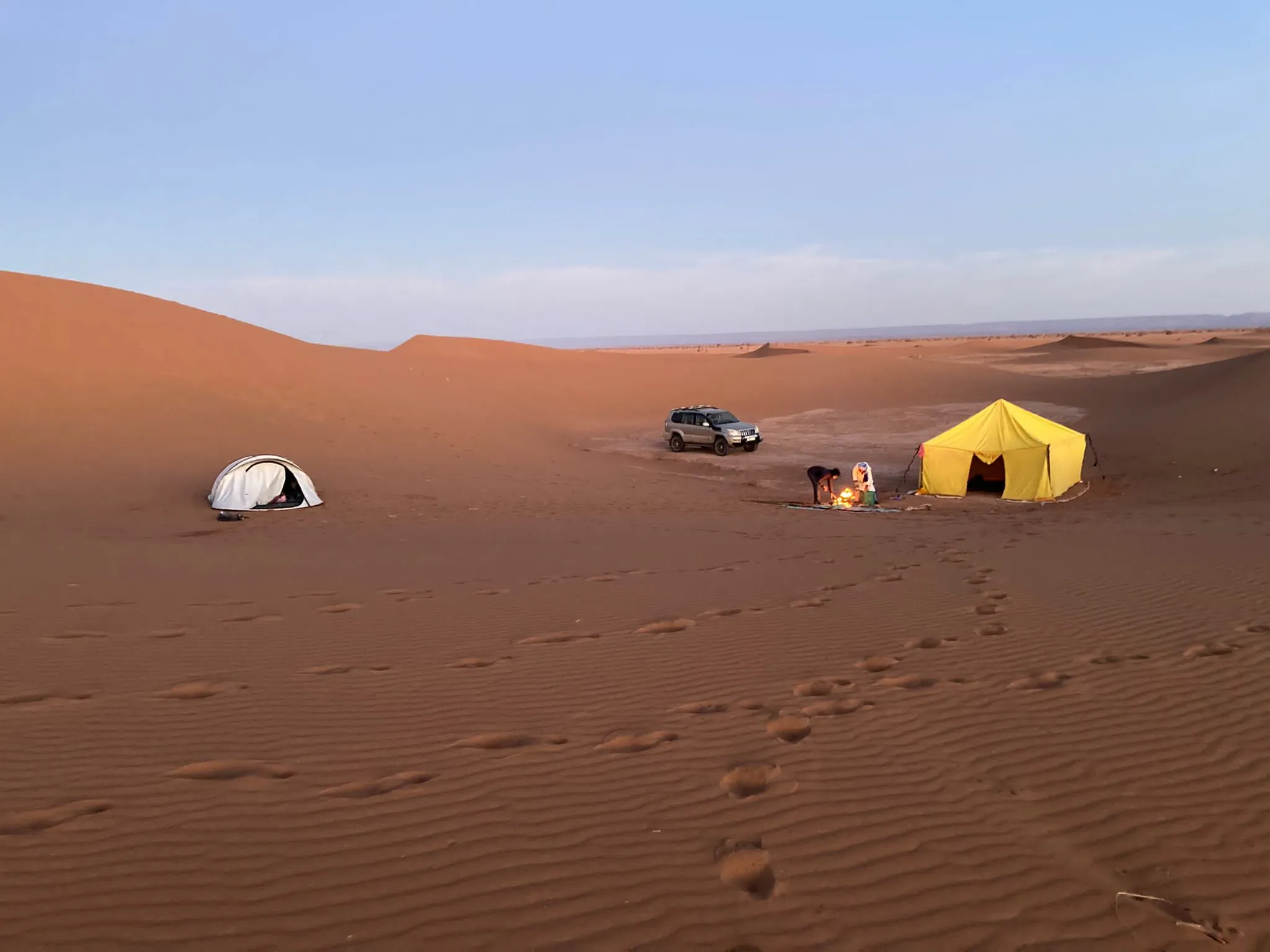
Sahara Desert Climate
The Moroccan Sahara has an extreme desert climate with dramatic temperature swings between day and night. Understanding these patterns is essential for planning a comfortable and safe desert experience.
During the day, temperatures can reach 30-40°C (86-104°F) even outside summer months. At night, especially in winter, temperatures can drop to 5-10°C (41-50°F) or lower. This variation means you'll need to pack for both warm and cold conditions.
Best Time to Visit: October to April offers the most comfortable temperatures for desert activities. Peak season is October-November and March-April.
Seasonal Overview
| Season | Months |
| Spring | Mar-Apr |
| Summer | May-Sep |
| Autumn | Oct-Nov |
| Winter | Dec-Feb |
Month-by-Month Guide
October - November (Peak Season)
These are the most popular months for desert travel. Days are warm but not hot (25-30°C), and nights are pleasantly cool. The summer heat has subsided, making trekking comfortable. This is the ideal time for multi-day camel treks and camping.
- Comfortable daytime temperatures
- Cool, pleasant nights
- Clear skies, excellent for stargazing
- Book early—this is peak season
December - February (Winter)
Winter in the Sahara brings mild days and cold nights. Daytime temperatures of 15-22°C are pleasant for walking, but nights can drop to 3-10°C or even below freezing in exposed areas. Warm layers are essential for evening and early morning.
- Mild, comfortable daytime walking temperatures
- Very cold nights—bring warm layers
- Fewer tourists than peak season
- Excellent visibility and clear skies
March - April (Spring)
Spring offers conditions similar to autumn, with warming days (25-32°C) and comfortable nights. Occasional sandstorms can occur as the weather transitions, but these are usually brief. A great time for photography as the desert begins to warm.
- Warm, pleasant days
- Occasional sandstorms possible
- Good for photography
- Desert begins warming up
May - September (Summer)
Summer in the Sahara is extremely hot, with daytime temperatures regularly exceeding 40°C (104°F). Most tour operators, including Sahara Wonders, do not recommend multi-day treks during this period. If you must travel in summer, expect very early morning departures and afternoon rest in shade.
- Extreme heat (40°C+ common)
- Multi-day treks not recommended
- Early morning activities only
- Most operators suspend long treks
Temperature Reference
| Month | Day High |
| January | 18°C (64°F) |
| February | 20°C (68°F) |
| March | 25°C (77°F) |
| April | 28°C (82°F) |
| May | 33°C (91°F) |
| June | 38°C (100°F) |
| July | 42°C (108°F) |
| August | 42°C (108°F) |
| September | 36°C (97°F) |
| October | 28°C (82°F) |
| November | 23°C (73°F) |
| December | 18°C (64°F) |
Frequently Asked Questions
October and November offer the ideal combination of warm but not hot days and cool but not cold nights. March and April are equally good. Avoid June through August for trekking.
In winter (December-February), nights can drop to 3-10°C (37-50°F) or even below freezing in exposed areas. In summer, nights stay warm at 20-28°C (68-82°F). Always bring warm layers regardless of season.
You can visit, but multi-day treks are not recommended. If traveling in summer (June-August), expect activities to be limited to very early morning and evening. Day temperatures of 40°C+ make midday desert travel dangerous.
Even in warm months, bring a warm jacket or fleece, long pants, and warm socks. In winter, add thermal layers, a warm hat, and gloves. The temperature drop after sunset is dramatic.
Sandstorms can occur, particularly in spring (March-April) during weather transitions. They are usually brief (hours, not days). Guides know how to manage them safely. Pack electronics in sealed bags.