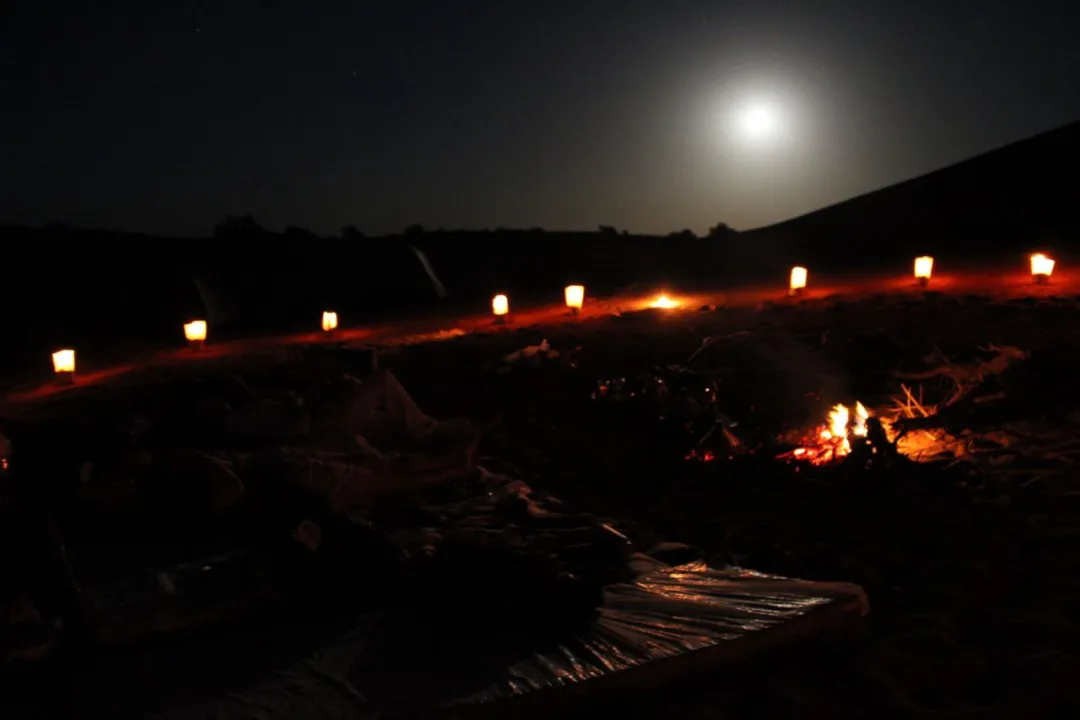
Storytellers Trek in the Sahara Desert of Morocco | From M’Hamid to Erg Chigaga
When people imagine a desert trek, they often picture dunes, camels, and long horizons. Those are certainly part of the experience. What stayed with me most, though, was the evening conversation around the fire. After a day of walking, someone would tell a story, another person would add a detail, and before long the group was talking about places, families, old journeys, and lessons learned on the road.
In the nomadic communities of southern Morocco, stories carried information that could not be stored in books or buildings. Families moved between wells, grazing areas, and seasonal camps. Memory travelled with them. A story could preserve the history of a place, explain a custom, or help younger generations understand how to live in a demanding environment.
Storytelling as collective memory in the Moroccan Sahara
Among Saharan nomads, stories have often filled the role that libraries and archives play elsewhere. When a camp moved on, very little physical evidence remained. What survived were the memories people shared. Elders passed on family histories, descriptions of routes, accounts of important events, and stories connected to particular wells or dunes.
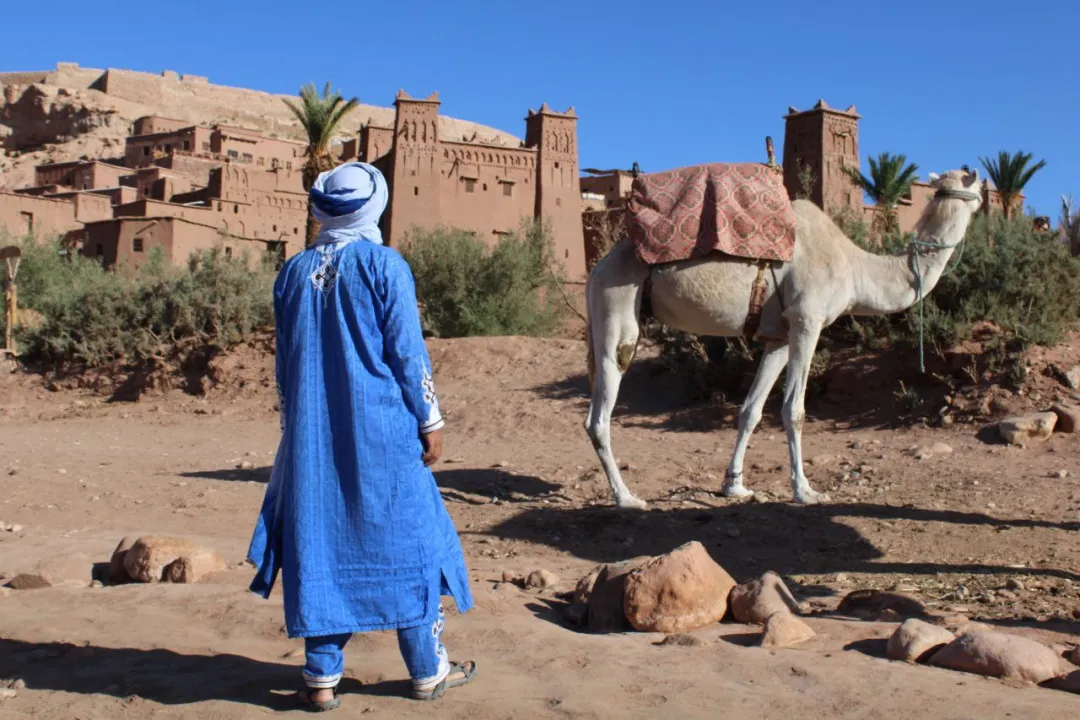
The landscape itself changes constantly. Wind reshapes dunes, tracks disappear, and camps come and go. Oral tradition helped communities maintain a sense of continuity in a place that rarely stays still for long.
Moral education around the desert campfire
Stories also taught values. Children learned by listening. A respected character in a desert tale was rarely admired only for strength. Wisdom, patience, fairness, and hospitality mattered just as much. Many stories rewarded good judgement and warned against arrogance or carelessness.
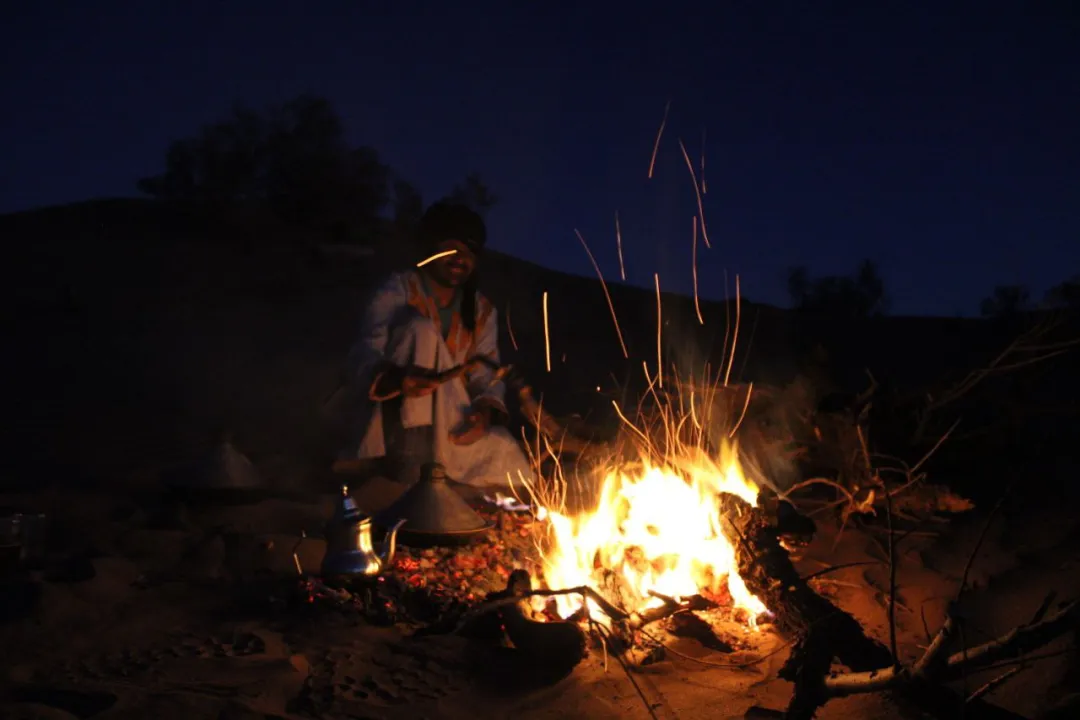
Travellers who join a trek from M'Hamid sometimes expect cultural experiences to arrive as scheduled activities. In practice, they often happen naturally. Someone remembers an old story, another person translates a few details, and a conversation grows from there.
The desert as a character
One thing I noticed in many Saharan stories is that the desert never feels like a backdrop. The landscape acts almost like another participant. Wells, hills, dunes, and remote camps carry memories. People refer to places not just by location but by the events connected to them.
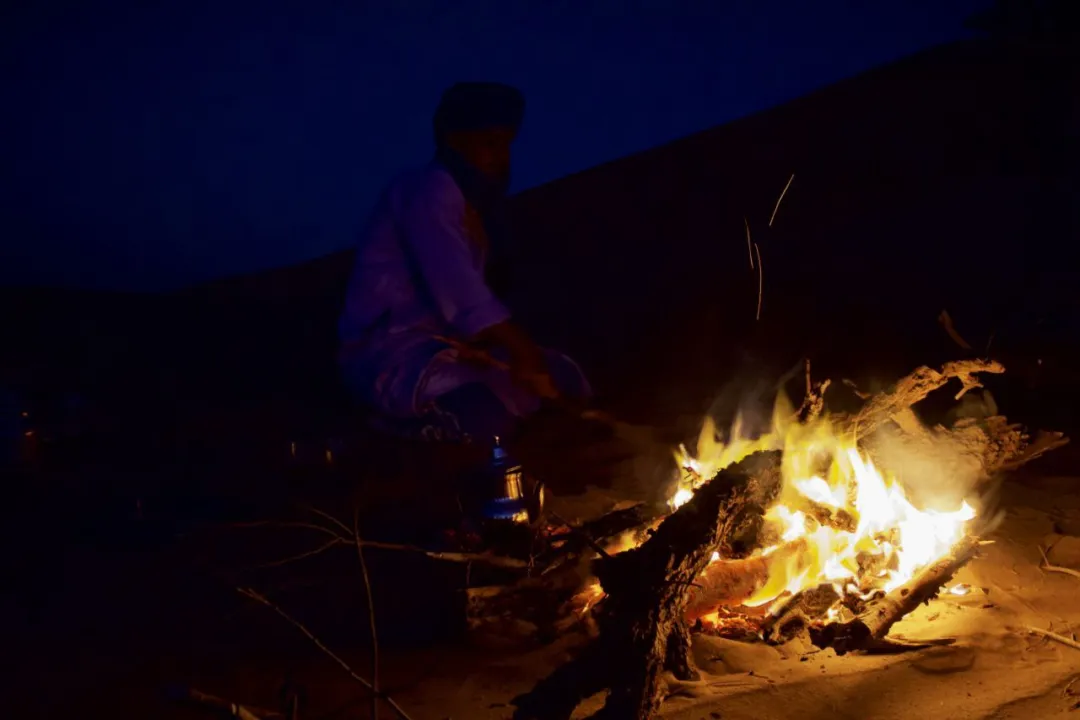
Walking toward Erg Chigaga or Erg Essamar gives some context to those stories. Distances feel different on foot. A place name that sounds ordinary on a map starts to mean something once you have spent hours crossing the terrain that surrounds it.
The hakawati tradition
Morocco has a long tradition of storytellers known as hakawati. A skilled storyteller uses memory, timing, humour, and voice to hold the attention of a crowd. In towns, storytelling circles have gathered listeners for generations. In the desert, the campfire often becomes a smaller version of that gathering.
The stories themselves can mix history, local legend, personal experience, and spiritual themes. The boundaries are not always neat, which is part of what makes them interesting to hear in their original setting.
Walking and listening on the Storytellers Trek
The Storytellers Trek follows a simple idea. We walk through the Sahara during the day and spend the evenings together at camp. The route usually takes five or six days from M'Hamid El Ghizlane toward remote dune areas such as Erg Chigaga and Erg Essamar.
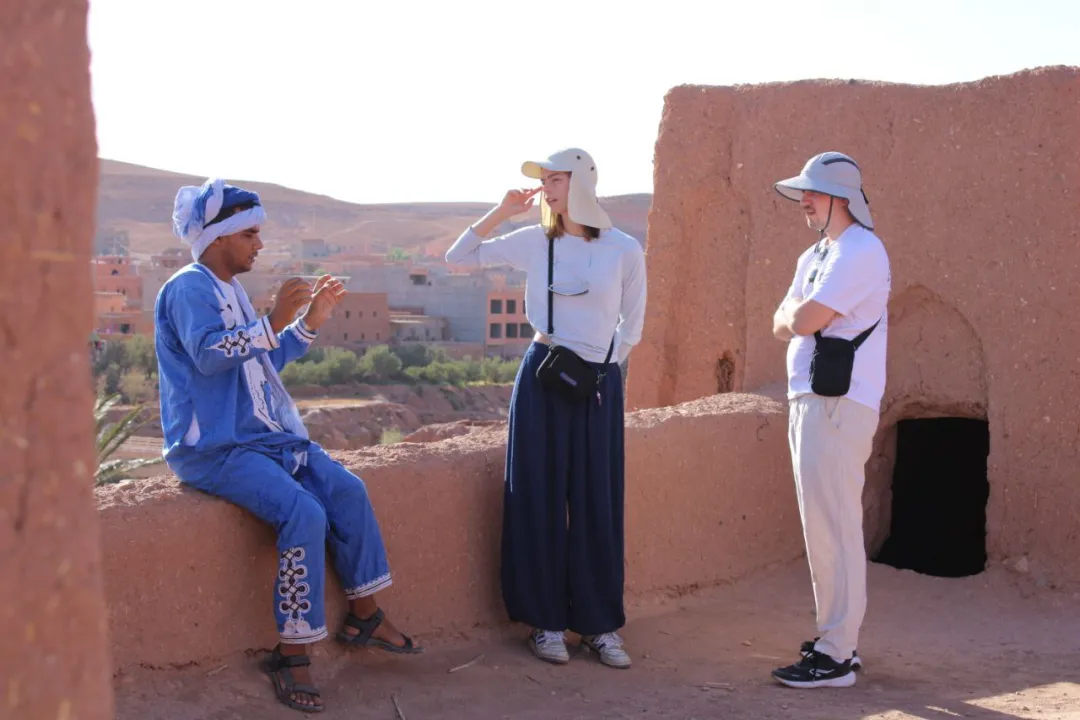
What I appreciate about these evenings is that they do not feel staged. Nobody climbs onto a platform and performs for an audience. Stories appear in conversation, often alongside tea, dinner preparations, or discussions about the next day's route. Some are funny. Some explain local customs. A few wander off in unexpected directions before returning to the original point.
For travellers interested in culture as much as landscapes, those moments can become the most memorable part of the journey. The dunes are still there in the morning, but the stories give them context.
Gallery