The Apple of Sodom – The Tree That Tells the Story of the Desert
When I guide travelers through the Sahara, there is a spot where I usually stop for a few minutes. Around us there may be dunes, gravel plains, and long stretches of open ground with very little growing. Then someone notices a shrub with thick leaves and asks what it is. Most of the time, that is how the conversation about the Apple of Sodom begins.
A resilient desert dweller
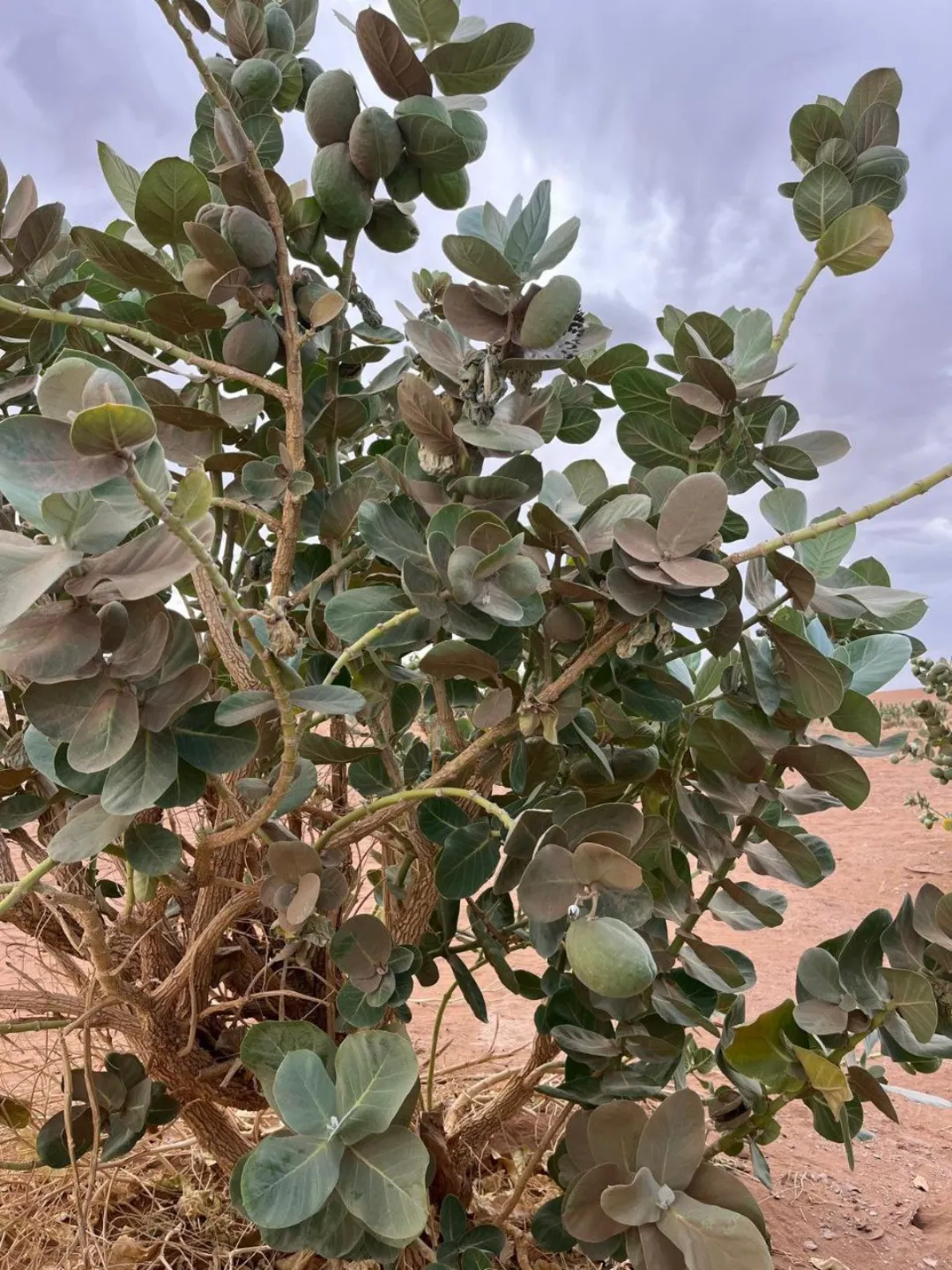
The Apple of Sodom, or Calotropis procera, survives in places that look completely dry for most of the year. I usually point out its large green leaves first. They feel almost waxy, as if the plant is trying to keep every drop of moisture for itself. The flowers are easy to miss from a distance, but up close they have soft shades of white and purple.
If a branch breaks, a milky latex appears. I always mention that people should avoid touching it because it can irritate the skin. That surprises many visitors. A plant can be both useful and toxic at the same time, which is a common theme in desert life.
More than just a plant
People sometimes imagine the desert as empty, but nomadic communities have always paid attention to the plants around them. The Apple of Sodom has been part of that knowledge for generations. Its wood is light and can be used for small campfires. On cool evenings, when we make tea and sit near the embers, I occasionally mention that some of the fuel may come from shrubs like this one.
The fruits are what usually catch people's attention. They are round, slightly swollen, and not very much like the apples their name suggests. Inside is a mass of silky fiber attached to the seeds. When the fruit opens, the wind carries them away. I have watched guests follow the floating seeds with their eyes until they disappear into the distance.
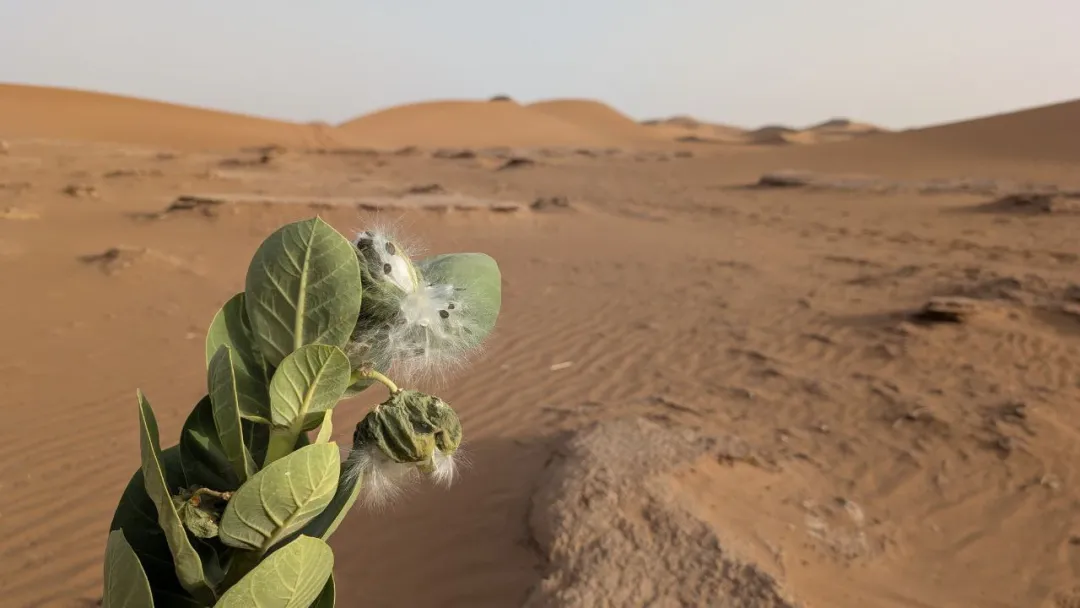
Some people who work in desert regions see the spread of this plant as a sign that dry conditions are expanding into fragile land. Whether we are walking near Erg Zahar or spending the night closer to Erg Chigaga, that often leads to a longer discussion about water, grazing, and how people adapt to a harsh environment.
Stories around the camp
I have told the story of this plant many times, and the reactions are usually similar. Travelers start by seeing a shrub in the middle of nowhere. A few minutes later they are asking about nomads, traditional knowledge, and how life works in a place that seems so empty from a distance. I like that change of perspective.
When people remember a trek in the Sahara, they often remember the dunes, the camels, and the night sky. Sometimes they also remember a plant they had never heard of before. For me, that is part of what makes guiding enjoyable. A simple stop beside a desert shrub can turn into one of the most interesting conversations of the trip.
If you join a camel trek from M'Hamid, there is a good chance we will come across an Apple of Sodom somewhere along the route. It is not the largest thing in the desert, but it has a way of making people slow down and look a little more closely at the landscape around them.