M’hamid El Ghizlane – My Home at the Gateway to the Sahara
I was born into a nomad family in the Sahara. Some of my earliest memories are very ordinary to me now: following camel caravans, sleeping under a sky full of stars, and waiting for bread to finish baking beneath the sand. At the time I did not think of any of it as unusual. It was simply how we lived.
Today I live in M'hamid El Ghizlane, the last village before the large dune fields of southern Morocco. When visitors arrive here, they often notice the same thing. The landscape changes gradually, then quite suddenly. Palm groves and fields give way to open desert, and the feeling of being connected to the outside world becomes a little more distant.
Where the road ends
M'hamid has a long history as a stopping point on the old caravan routes that linked Morocco with lands farther south. You can still hear stories about those journeys from older people in the village. The name "El Ghizlane" refers to gazelles. They are much less common than they once were, but the wide open spaces that suited them are still here.
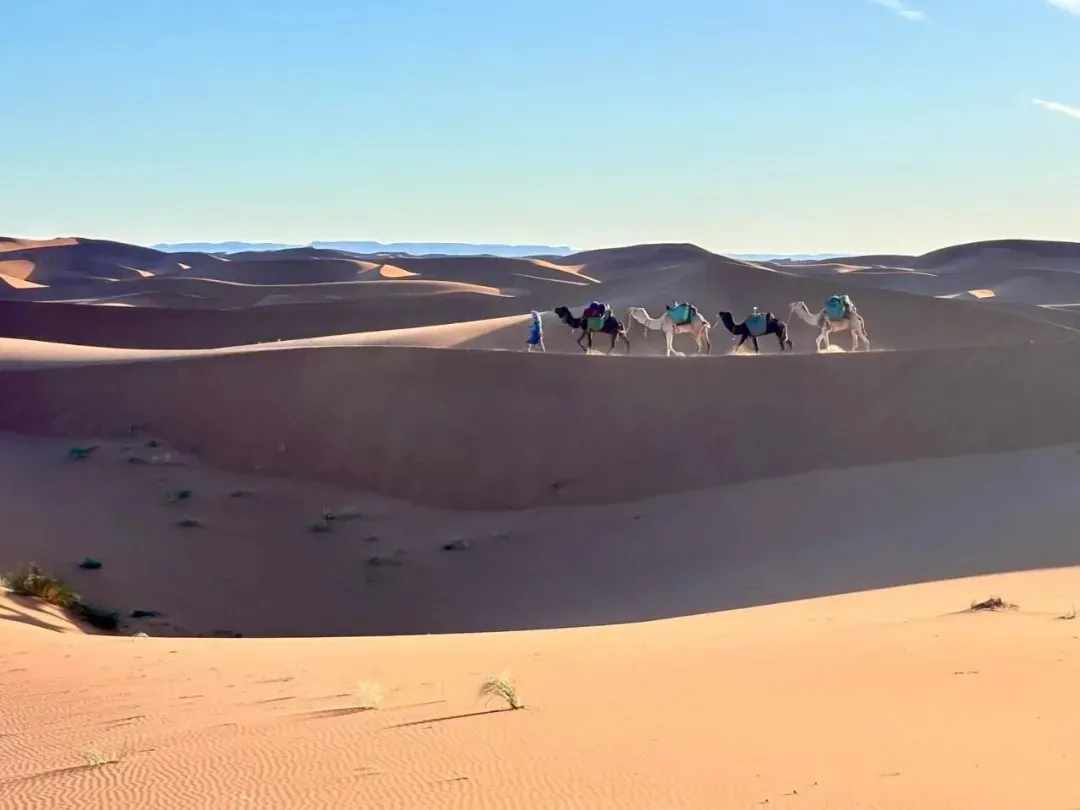
Most travelers come because they want to see Erg Chigaga, Erg Zahar, or the other dune areas beyond the village. What many remember most, though, is not a particular dune. It is sharing tea in the shade, sitting around a fire after dinner, or hearing almost nothing at all once the conversation fades away.
The spiritual heart of the Sahara
Visitors sometimes ask why the desert feels different from other places. I do not have a perfect answer. I only know what I have seen. People arrive carrying busy schedules, unfinished conversations, and the usual worries of daily life. After a few days walking or riding with the camels, many seem quieter. They pay more attention to small things, such as the shape of a dune or the color of the sky before sunrise.
Silence has a strong presence here. In a city, silence is rare enough that you notice it immediately. In the Sahara, it becomes part of the background. You can sit on a dune at sunset and watch the light change without feeling the need to fill every moment with activity.
As-sahra madrasat as-sabr. The desert is the school of patience.
Places such as Erg Zahar and Sidi Naji have attracted travelers, nomads, and people looking for solitude for generations. I would not claim that the desert has answers to every question. What it does offer is space. Sometimes that space is enough for people to hear their own thoughts more clearly.
A living invitation
When guests stay in M'hamid, I like to introduce them to the side of the desert that I know best. We travel with camels, share meals outdoors, and spend evenings under the stars. The experience can be as simple as one night in the dunes or as long as a week of walking between camps.
Guiding visitors here feels personal because this landscape shaped my childhood. I know the tracks, the wells, the tamarisk trees, and the quiet places where the wind drops for a while. If you come to M'hamid, I will probably tell a few stories, pour some tea, and show you the desert that I grew up with.